
'It's not about individuals operating the mule accounts being more or less skilled. Instead, 'lower-level' refers to the role the individual account plays in the broader mule network.'

Fraud reported by banks declined in 2024-2025 to 23,953 as compared to 36,060 in the previous year though the amount involved jumped to Rs 36,014 crore from Rs 12,230 crore.

The Reserve Bank of India (RBI) has proposed a standard operating procedure (SOP) for banks to implement temporary debit holds on accounts or transactions suspected of being involved in money-mule activity and cyber-enabled financial fraud, with a maximum duration of 60 days.

Nepal Police has urged the public to return any valuables, including gold, silver, cash, or documents, found after the August 26 floods, warning that keeping such items could lead to legal action. This warning follows the arrest of 29 people for allegedly looting a bank safe swept downstream by the floods.

A two-day weekend would help employees recover physically and mentally. They would return better prepared for branch work that demands patience, judgment, and accuracy, asserts Tamal Bandyopadhyay.

A man from Kochi has been arrested in connection with a 'digital arrest' scam that defrauded a retired judge in Rajasthan of Rs 2.5 crore. The accused allegedly threatened the judge with false links to hawala transactions and the Pulwama case, leading to his apprehension in a coordinated police operation.

A Delhi court has rescinded a Look-Out Circular (LOC) against Akash Gupta, an accused in a Rs 247-crore Punjab National Bank fraud case, stating that the seriousness of an allegation cannot be the sole reason for its continued operation. The court noted Gupta's cooperation and previous adherence to travel conditions.

Your credit card may have security controls you rarely use. Here are seven settings that can help prevent unwanted or fraudulent transactions.

RBI Deputy Governor Rohit Jain highlighted that banks are well-positioned to deploy $133 billion mobilised through FCNR(B) deposits, especially with strong credit demand ahead of the festival season, while also stressing the importance of robust technology governance and cyber defences in the financial sector.

UIDAI Chairman Neelkanth Mishra announced the extensive deployment of Artificial Intelligence to detect and counter fraud in Aadhaar, describing it as a "cat-and-mouse game." He highlighted the dramatic increase in daily Aadhaar authentications and the launch of the Aadhaar Face Authentication SDK and Sandbox to enhance security and ease of integration for ecosystem partners.

Keeping KYC information accurate and current should, therefore, be seen not merely as meeting a regulatory requirement, but as an important part of safeguarding one's own financial identity and safety, explains RBI Deputy Governor J Swaminathan.

The National Payments Corporation of India (NPCI) stated that the Merchant Discount Rate (MDR) "is distributed only amongst the UPI ecosystem, to further invest into infrastructure resilience, innovation, cybersecurity (protecting the UPI infrastructure with banks and non-banks) and customer service."

Do not share OTPs, PINs, authentication codes, card numbers, card verification values (CVVs), KYC details, security answers, Internet-banking passwords or Aadhaar-based authentication credentials through SMS, e-mail or phone calls.

A local court in Mumbai acquitted a 23-year-old Jharkhand resident in a cyber fraud case, citing a lack of evidence proving a criminal conspiracy. The court ruled that merely crediting a defrauded amount into a person's bank account does not constitute a criminal offence without proof of involvement in the conspiracy.

The government is introducing a 0.4% Merchant Discount Rate (MDR) on UPI person-to-merchant payments above Rs 2,000, effective October 15. This move ends the zero-MDR regime, aiming to fund UPI infrastructure and sustainability, as the previous government subsidy was insufficient to cover operational costs. Payments between individuals and most everyday merchant transactions will remain free.

The Indian government has introduced a 0.4% Merchant Discount Rate (MDR) on UPI person-to-merchant (P2M) transactions exceeding Rs 2,000, effective October 15. This move ends nearly six years of fully free UPI payments, though person-to-person (P2P) transfers and small P2M payments remain free. The charges aim to bolster investment in UPI infrastructure, with specific exemptions and caps for essential sectors.

Congress leader Rahul Gandhi has accused the Modi government of quietly paving the way for imposing fees on UPI transactions, alleging it's a surrender to American pressure. The government's recent notification exempts charges only up to Rs 2,000, sparking concerns that higher value transactions and eventually all UPI payments could incur fees. Finance Minister Nirmala Sitharaman, however, clarified that Merchant Discount Rate (MDR) applies to merchants, not customers, and supports digital infrastructure.

Three officials from leading private banks have been arrested for their alleged involvement in a Rs 2,500-crore cyber fraud racket in Gujarat's Rajkot district, bringing the total number of arrests in the case to 20.
The Finance Ministry has clarified that the decision to impose a 0.4% Merchant Discount Rate (MDR) on UPI transactions above Rs 2,000 was made independently, refuting claims of foreign influence. The ministry stated the policy aims to build a self-sustaining digital payments ecosystem, with MDR funding infrastructure and supporting small merchants.

Three officials from leading private banks have been arrested for their alleged involvement in a Rs 2,500-crore cyber fraud in Gujarat's Rajkot district, bringing the total number of arrests in the case to 20, according to police reports.

The Congress party has criticised the government's recent notification regarding UPI transactions, alleging it paves the way for users to be charged fees, particularly for transactions above Rs 2,000. The party claims the government lacks transparency and questions if the move is to benefit American firms. The government, however, states that charges are necessary for the system's sustainability and infrastructure upgrades, with the Finance Minister clarifying that Merchant Discount Rate (MDR) applies to merchants, not customers.

'It's A Cat And Mouse Game.'

The High Court of Justice in London has rejected a fresh bail petition filed by diamantaire Nirav Modi, who is wanted in India in connection with the Rs 13,000 crore Punjab National Bank (PNB) fraud case.

India's UPI International payment system is now playing a crucial role in humanitarian efforts, enabling seamless disaster relief donations from Indian users to Nepal's Prime Minister Disaster Relief Fund, showcasing its growing global acceptance and utility beyond tourism. UPI IMAGE: Kindly note that this image has been posted for representational purposes only. Photograph: Unsplash Key Points UPI International, initially for Indian tourists, is now facilitating disaster relief donations to Nepal's Prime Minister Disaster Relief Fund. The embassy of Nepal in India is actively encouraging Indian users to utilise their UPI apps for these contributions. This marks a significant shift, expanding UPI's cross-border use case beyond tourism to include inbound collection for foreign governments. The move positions UPI International alongside global payment giants like Alipay+ and UnionPay for international aid. Donors need to activate the UPI International feature on their apps to transact, with amounts converted from INR to NPR.

A think tank, GTRI, has urged India to resist US pressure regarding its UPI policies, advocating for the defence of competition, policy autonomy, and the long-term sustainability of its payments ecosystem. This comes as the Lok Sabha passed a bill allowing charges on UPI transactions, a move GTRI suggests should not be influenced by foreign trade complaints.

Making UPI payments fee-based for some transactions could enhance mental reservations against digital payments -- which have largely been overcome -- once more. Do we want to regress?, asks R Jagannthan.

RBI Deputy Governor Rohit Jain discussed the future of India's foreign exchange markets, highlighting the increasing role of local currencies in cross-border trade, the impact of technology, and existing challenges. He emphasised the need for market evolution to facilitate India's global engagement, absorb shocks, and serve all users efficiently. Jain also addressed concerns about unauthorised forex trading platforms and the importance of customer awareness.

The biggest challenge to widespread deployment is no longer AI. It is the financial and commerce infrastructure that was built decades ago for deterministic software and human interactions -- not autonomous AI agents.

Customers will qualify for compensation even if they mistakenly share the OTP.

Aditya Puri is one of the cleanest examples we have, in Indian corporate history, of a leader who understood early that the measure of his work was not what happened while he was in the chair. It was what would keep happening when he was no longer there, says Suresh M K.

The Indian government has clarified that consumers will not be charged for UPI transactions, and most merchant transactions will also remain free. This comes amidst speculation following an amendment to the Payment and Settlement Systems Act, 2007. Any future merchant discount rate (MDR) would be nominal, threshold-based, and aimed at ensuring UPI's long-term sustainability and infrastructure development.

By enabling real-time data sharing, the platform will help prevent scams and ensure secure transactions.

The Supreme Court has directed the Central Bureau of Investigation (CBI) to examine all six allegations of financial irregularities levelled by the Enforcement Directorate against Sameer Gehlaut, former chairperson of Indiabulls Housing Finance (IHFL), and five corporate groups, following repeated criticism of investigating agencies for lack of progress.

'Taxpayers should not ignore any of these notices. Verifying the facts and responding promptly can help resolve issues early and avoid unnecessary litigation.'

The first thing cardholders should do after spotting a suspicious charge is block the card.

Delhi Police have arrested two individuals from Rajasthan for allegedly defrauding a Delhi resident of over 21 lakh through a high-return online investment scam. The accused lured the victim with promises of lucrative returns and prepaid tasks.

The London High Court has rejected Nirav Modi's petition to reopen his extradition case, citing the Indian government's assurances regarding his treatment in India as a key factor in their decision.
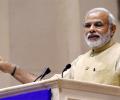
Union Minister Pankaj Chaudhary stated that Prime Minister Narendra Modi strengthened the Enforcement Directorate to combat financial crimes like money laundering and corruption, dismissing allegations of it being used to target political opponents.
Union Minister Pankaj Chaudhary stated that Prime Minister Narendra Modi strengthened the Enforcement Directorate (ED) to combat financial crimes like money laundering and corruption, dismissing allegations of it being used to target political opponents.

Dr Lovi Raj Gupta, pro vice-chancellor, Lovely Professional University, explains how aspiring professionals can equip themselves for a competitive AI-driven job market.
